Snøhetta-designed headquarters for the Le Monde Group opens in Paris
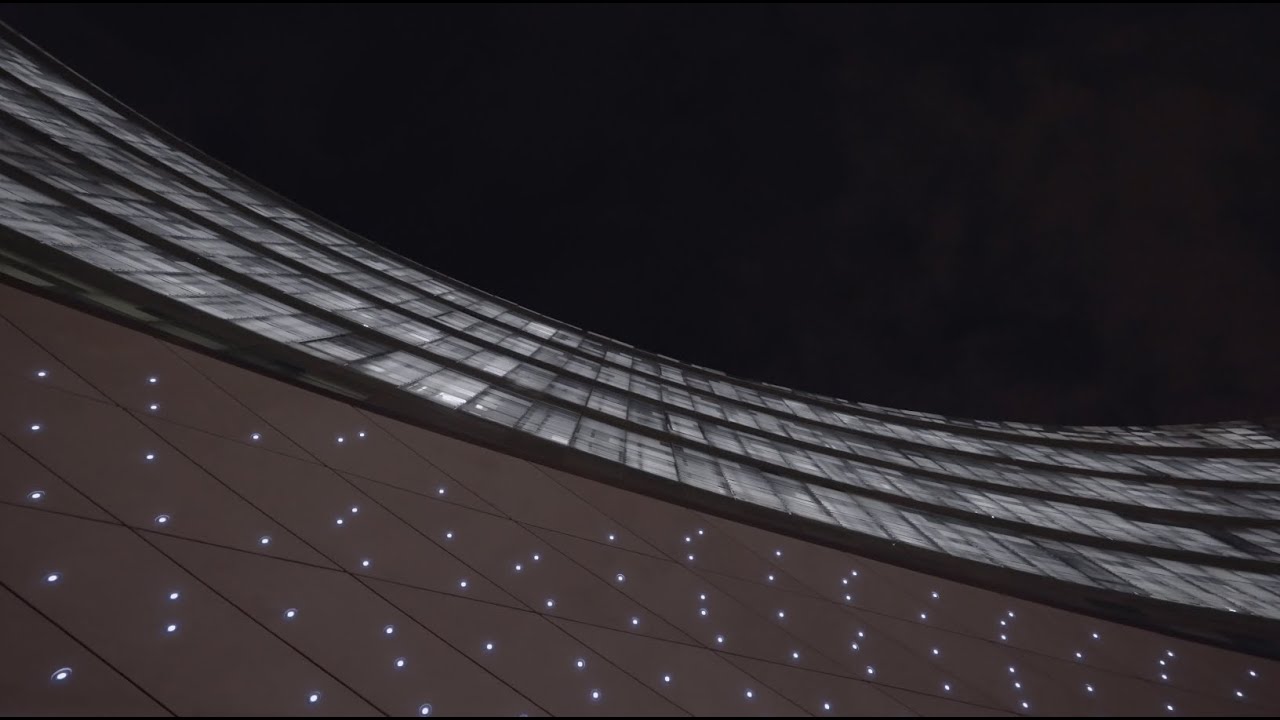
With the completion of its new headquarters, the 1,600 employees of the Le Monde Group have been brought together under the same roof in a generously arching building on 67-69 Avenue Pierre-Mendès-France in the 13th arrondissement of Paris. With its bold new plaza and semi-transparent outer skin, the building creates connections to the general public and surrounding transit while also offering citizens and passersby a generous respite in the city. On December 11, 2020, the building received the prestigious French real estate prize, the Grand Prix SIMI, within the category “New Office Building Larger than 10,000 m²”
.jpg)
The Le Monde Group comprises some of France’s most famous publications, including Le Monde, Courrier International, Télérama, La Vie, and HuffPost, and their new home unites them under a shared roof together with the publication l’Obs, which is also owned by the group’s shareholders. Previously scattered across different sites in Paris, the six newsrooms now share a common home on the Rive Gauche of Paris, all while remaining independent and retaining their own space in the building.
The project represents Le Monde Group’s re-investment in its staff at a time where other media outlets experience a down-sizing of their newsrooms, and their deep commitment to cultivating a vibrant public realm through democratic access to information and physical space. A translucent, dynamic façade and expansive public plaza express the building’s openness to its surrounding context.
– I am happy the Le Monde Group has chosen the heart of the Paris Rive Gauche district as home for its new headquarters, and by doing so, contributing to the district’s transformation, says the Mayor of Paris, Anne Hidalgo. – Besides the building’s magnificent architecture, the project’s openness to its surroundings will make it an integral part of everyday life, both for the district’s inhabitants and the 13th arrondissement. At a time where information and dialogue are more essential than ever, my hope is that the 67-69 Avenue Pierre-Mendès-France becomes the heart of this exchange, promoting transparent and accessible information for all.
Indeed, the project itself emerged from a moment when these priorities were called into question. As the Le Monde Group deliberated over architectural proposals for their future home in early 2015, just days after the attacks on Charlie Hebdo Magazine’s headquarters, they ultimately selected Snøhetta and local partner SRA Architectes’ design, opting for a building that remains in open dialogue with the city of Paris and its inhabitants.
– Since its inception the Le Monde Group Headquarters has embodied an architectural and symbolic counterpoint to the many challenges our societies face today. The building is primarily about opening up in a time where fear and uncertainty pushes our societies to increase barriers and strengthen security enforcement. In this sense, the project invites us to reflect on how architecture can create spaces that can be both public and private, exterior and interior, transparent or opaque. Like so many other of our projects, it is a hybrid building that explores the interstices of architecture and that is conceived to be at the service of the public, says Founding Partner of Snøhetta, Kjetil Trædal Thorsen.
Sitting adjacent to the historic Gare d’Austerlitz train station, the project is a close neighbor to the historic Latin Quarter and the lushly planted gardens of the Jardin des Plantes. The concave form of the building bridges over the below-grade railyard, anchored on both sides with two seven-story cantilevering volumes held together by a complex network of steel. Three gestural «cuts» shape the building mass: the «sky cut» reveals the oblique surface of the solar-panel-clad roof; the «city cut» pulls the building back from the along its street-facing facade; and the «ground cut» carves out the underside of the bridging structure, enveloping the new public plaza together beneath its expansive arched form.
-The construction of the Le Monde Groupe Headquarters marks a historic milestone for all our publications, explains the CEO of the Le Monde Group, Louis Dreyfus. – Our building illustrates both our editorial and aesthetic ambitions, but also the diversity of our newsrooms. In a world where the demand for high quality information is only increasing, our new common home offers our 1,600 employees a luminous working space with top amenities and dedicated spaces for each newsroom. This in turn ensures that we can continue to deliver journalistic content on all our platforms and in all formats, whether written or audiovisual, both today and in the future. Moreover, the office interiors, developed in collaboration with Archimage, offers our newsrooms a warm and soothing atmosphere with secluded spaces that ensure privacy when needed, says CEO of the Le Monde Group, Louis Dreyfus.
***
This press release is also available in French. You can download a PDF of the French version of the press release below the image section.
A Uniting Structure at the Heart of Modern-Day Paris
The 23,000 m2 Le Monde Group Headquarters is built at the intersection of the old, historic parts of the French capital, and the more modern districts on the Rive Gauche. A previously industrialized area with railway tracks, the district has experienced a mass development since the beginning of the 1990’s under one of the most comprehensive urban developments of the French capital since 18th century Haussmannization. Today, the district has continued to develop as a high-density commercial and business district.
The building’s pixelated outer skin is composed of more than 20,000 pixelated glass elements in a strictly organized pattern with 772 possible configurations, that give the building a sheer appearance that shifts with the changing weather and light conditions. Each glass element represents one distinct pixel classified on an opacity scale ranging from transparent to fully opaque depending on its placement, allowing for the best views from the building as well as a maximum of daylight penetration. This highly sophisticated pattern references the printed letters of newspapers and magazines and makes up a text-like pattern that can be read more clearly when the 10 000 m2 facade is seen from afar.
Spanning 80 meters from one side to another, the building is a response to the conditions and challenges of the site: Acquired by the Le Monde Group in 2014, the site is situated just above the railways and platforms of the Gare d’Austerlitz which makes the creation of a technical basement impossible. The first challenge, therefore, was to construct a building where the entire technical system of the building would be cleverly incorporated into the structure of the building itself. The second challenge was that the site could only carry a specific amount of weight, and only on the two extremities of the site. As the middle section was not planned to hold the weight of a building, the client’s initial brief was to create two buildings on the parts of the site that were buildable.
Snøhetta and SRA Architectes' response to these challenges was to work on the idea of merging the two units together through a bridging structure of steel that would literally leapfrog from one side of the site to the other: a highly demanding engineering task for a building that weighs more than the Eiffel Tower. Nonetheless, it was a necessary one: only a unified building would create the dynamic environment needed to unite the different magazine and newspaper titles of the Le Monde Group.
A Walk Through the Building
The journey through the Le Monde Group Headquarters commences at ground level where visitors are greeted by a broad public plaza with integrated vegetation. The plaza invites passersby to linger and interact while also creating connections to the cityscape on each side of the building. From 2021, this physical connection will be further enhanced with the introduction of a new bridge that will spanning across the neighboring railways of the Gare d’Austerlitz.
New retail spaces also help activate a dynamic public realm. Situated below the warmly lit arch of the building, custom designed concrete benches offer refuge from the activity of the busy surrounding area. The site further encourages diverse transit modes and greener mobility alternatives with more than 300 bicycle parking slots and through its immediate proximity to neighboring train station.
The materiality of the plaza is predominated by concrete with clear references to the urban context of the building. The concrete environment creates a sense of continuity and consistency, as if parts of the ground were gently peeled back and fused into the arching roof soaring above the plaza. Cast in in-situ concrete, the arch above the plaza is carefully hand-treated to create a textured finish.
The concrete plaza and elements from the façade continue inside the building. The building’s wayfinding, which is also developed by Snøhetta, is inspired by the glazed facade of the building and adorned with classic typewriter typography. This custom wayfinding guides visitors and staff effortlessly through the building.
The Le Monde Group Headquarters can be accessed from the two extremities of the building, one of them public, leading to food and retail services and providing access to a two-story auditorium. The other entry leads to a reception area for parts of the building which are only accessible to the Le Monde Group. The reception area reveals itself as a white canvas framed by a grey-scaled concrete terrazzo flooring that evokes the plaza outside.
Two large amphitheater stairs in each entry lead up to the third level of the building, providing an unformal meeting space for staff and visitors. The stairs mark a physical continuity with the building’s arching middle-section, as if the stairs were mounted on top of it. The stairs provide access to the auditorium through an open reception area, well-suited for either conferences or receptions. The floor also comprises a staff cafeteria and restaurant including back office functions and meeting rooms.
From the third to the eight floors, the building offers high-quality, expansive open office spaces with a ceiling-integrated heating, ventilation and lighting system assuring the building offers maximum layout flexibility. With its floor-to-ceiling windows, and views overlooking the Seine and the surrounding city of Paris, the offices offer a bright and spacious backdrop for the thousands of employees and journalists of the Le Monde Group. Floors second also feature amenities such as a library, a staff restaurant and an analogue archive dedicated to the Le Monde Group.
From the fifth to the sixth floor, one finds the office spaces dedicated to the Le Monde newsgroup. Just like the office floors below, the Le Monde offices are organized as an open space, while also offering a diversity of flexible workspaces that integrate over 100 private work areas and over forty meeting rooms for group collaboration. The floors are connected by a double-spiraling staircase that opens the central part of the two levels. The staircase ties the newsroom together, breaking down artificial collaboration barriers and securing that information may be shared easily across the entire newsroom.
Finally, the top level of the building leads out to an open-air terrace which is accessible from both sides of the building. Framed by vegetation, the terrace creates beautiful views overlooking the surrounding cityscape and the Seine.
***
About the sketches in the image link below:
Upon request from the Le Monde Group, the artist Frédéric Chaume documented progress on the building site three or four times a week from October 2017 until June 2020. His striking drawings are based on more than 250 visits to the building site and provide a unique glimpse into the world of architecture, urban development and construction. A selection of these images can be downloaded below.